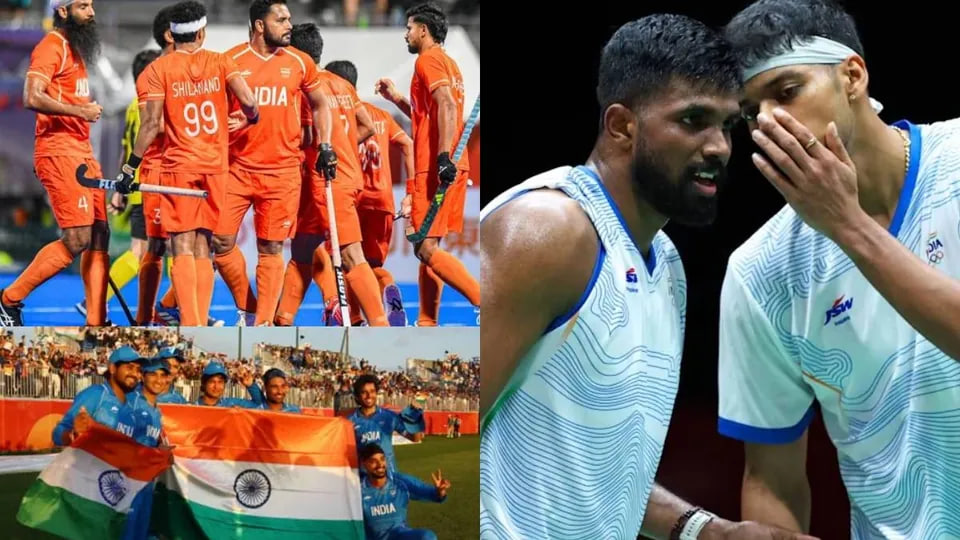
Of the 28 golds India defended in Japan this time, only eight came back.
At the Hangzhou Asian Games in 2023, India scripted its best-ever show — 106 medals, with 28 golds and a lot of chatter about the arrival of a sporting nation. Three years hence, India capped off the Aichi-Nagoya edition with 85 medals — their second-best performance at the Asiad — comprising 21 golds. That’s fewer in number, and strikingly, with a new cast of champions. Of the 28 golds India defended in Japan this time, only eight came back.
The Indian cricket and kabaddi teams — men and women — the men’s hockey team, and three compound team events — men’s, women’s, and mixed — successfully defended India’s gold at the 2026 Asian Games. And those eight golds were rather routine wins for India, anything less than which would have been an absolute shocker.
India is the Asian champion in cricket across both categories and returned with a second consecutive gold. In fact, in the men’s division, India were the only side to land in the Japanese city with a full-strength T20 squad. In hockey, the Indian men’s team finished top of the podium in two of the previous three editions, and with the overall standard of hockey in Asia falling well behind the world level, as seen in the recent World Cup, Harmanpreet Singh’s side cruised to a comfortable win, without a drop of sweat — albeit in the semifinal against Pakistan, when defensive lapses allowed their rivals to storm back and level at 3-3 in the third quarter.

In kabaddi, India has been the undisputed champion in both the men’s and women’s events in Asia. And in compound archery, India looked at home defending the men’s, women’s and mixed team golds, having been a dominant force in the events since their introduction at the 2014 Games.
Every gold India won was won by a team in which even personnel rotation did not affect the core unit. In fact, India won 15 team golds in 2023, of which eight were retained. What remains are solo or pair events — 13 in all — where India could not defend the crown. Neeraj Chopra’s javelin, Avinash Sable’s steeplechase, Tajinderpal Singh Toor’s hat-trick bid, both individual shooting golds, the badminton and tennis and squash pairs, and both individual compound archery crowns — all gone, every one of them.
Of the total 20 gold medals India could not defend, nine were near misses. Tajinderpal lost out on a gold hat-trick by 17 centimetres to a Games-record Iranian shot-put throw. The men’s 10m air rifle and 50m rifle 3-position teams were beaten by close margins to finish with silver. In men’s javelin, Neeraj did not travel to Japan owing to an injury, but Yashvir Singh, who won the Commonwealth Games bronze in July, led India’s hopes. His first attempt of 83.56m kept him in the gold-medal spot until eventual champion Rumesh Pathirage hurled an 88.33m throw on his third attempt, before bettering it to 88.56m on his final throw.
Among the collapses, the most shocking was Satwiksairaj Rankireddy and Chirag Shetty being bounced out in the first round of men’s doubles, losing to a pair ranked 36 places below them. The other came in archery, where defending champion Jyothi Surekha Vennam lost to a 14-year-old South Korean in the Round of 16 of the individual compound archery event.
What’s next: the 13 new golds
Of the 21 gold medals that India won in Aichi-Nagoya, 13 came from fresh champions, leaving India with hope as it looks towards the Los Angeles-adjacent cycles and the next Asian Games.
Eight of them were individual hauls — the most notable of those being 17-year-old Kumkum Mohod ending South Korea’s reign in women’s recurve individual. Neeru Dhanda — the first individual gold medallist for India at these Asian Games — was also the first Indian woman ever to win the women’s trap gold.